




What Can I Expect in Sonography School?
Key Takeaways
- Diagnostic medical sonography blends technology, anatomy, and hands-on patient care.
- Employment is projected to grow 13% from 2024 to 2034, much faster than average.
- Most people enter through an associate degree or certificate program that includes clinical experience, then pursue certification.
- ARDMS certification eligibility is tied to meeting specific education and clinical experience prerequisites.
- ECPI's Diagnostic Medical Sonography AAS includes 30 weeks of clinical experience and can be completed in as little as 21 months.
If you're looking for a new career path that feels practical and future-focused, diagnostic medical sonography is worth a serious look. Sonographers (sometimes called ultrasound techs) use specialized ultrasound equipment to create images that help clinicians assess and diagnose medical conditions. It's hands-on, patient-facing work at the intersection of technology and care.
It's also a field with strong momentum. Employment is projected to grow 13% from 2024 to 2034, much faster than average.
What The Work Actually Looks Like Day to Day
A lot of people first think of pregnancy ultrasounds. That's part of the picture, but sonography goes far beyond OB/GYN. Ultrasound is used across the abdomen, heart and blood vessels, breast, and even musculoskeletal imaging.
In the flow of a typical exam, a sonographer may:
- Review the order and patient history, explain what's about to happen, and answer questions
- Position the patient and select the right equipment settings
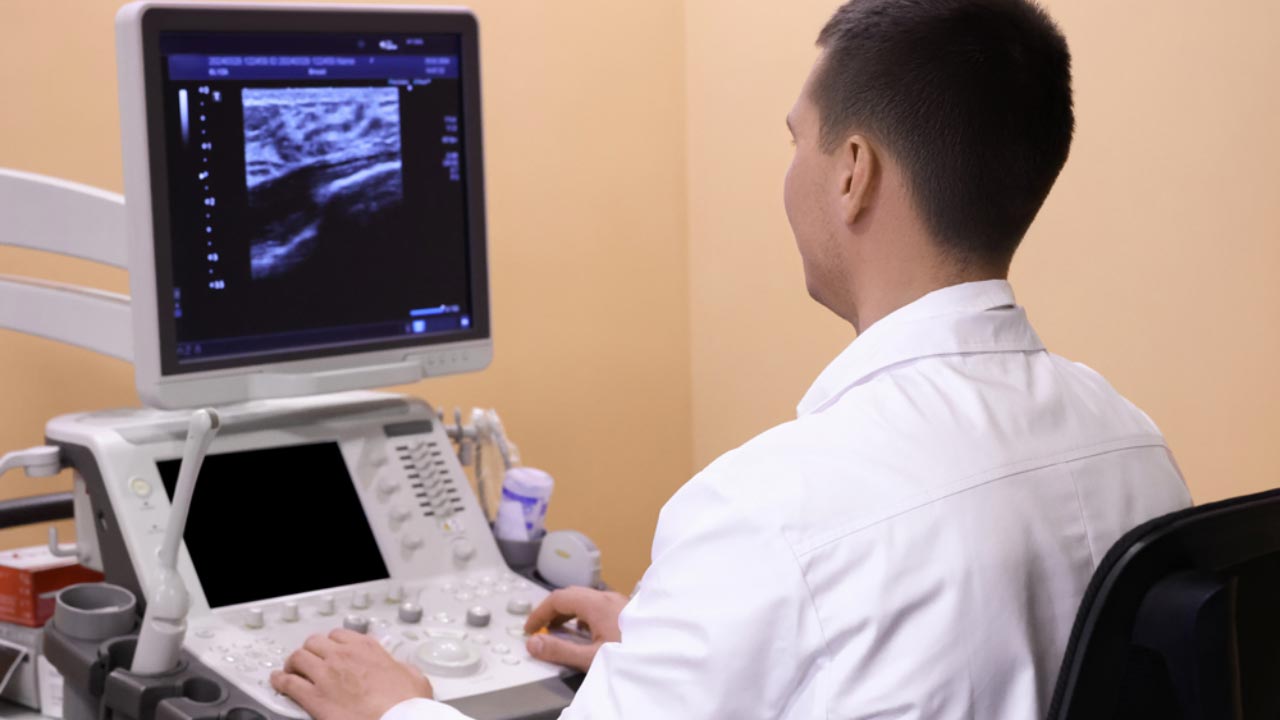
- Use a transducer (the handheld probe) to capture diagnostic-quality images
- Check image quality in real time, then document findings and share a technical summary for the interpreting clinician
The role combines focused medical knowledge, hand-eye coordination, and interpersonal interaction. Work settings are usually hospitals, physician offices, and imaging centers, with some shifts including evenings, weekends, or on-call time depending on the facility.
The Career-Switcher Question: How Does a Sonography Program Take?
If you're changing careers, uncertainty is the biggest friction point. Sonography is a role where the pathway tends to be structured, because you're learning a defined clinical skillset that requires real hands-on practice.
Sonographers typically complete at least an associate degree or a postsecondary certificate, and programs usually include a clinical component. From there, many professionals pursue certification. Certification eligibility is tied to meeting a prerequisite pathway based on education and clinical ultrasound experience.
Acceleration comes from a planned, year-round schedule and a defined sequence of coursework and clinical learning, not from shortcuts.
How Do You Become a Diagnostic Medical Sonographer?
While details vary by state, employer, and credential, most career changers follow a version of this sequence:
- Start with a program that includes real clinical learning. Sonography isn't something you learn purely from a textbook. You need time scanning, building image quality, and learning patient positioning and protocols under supervision.
- Build your foundation, then specialize as you gain experience. Sonographers often develop skills across multiple exam types before narrowing into a specialty. Common areas include abdominal, OB/GYN, and vascular imaging.
- Understand certification as a professional milestone. Many employers prefer or expect it. Requirements vary by credential, so it's worth confirming how clinical training and exam preparation fit together for your goals while you're still in school.
What To Look for in a Sonography Program
Career switchers usually care about two things at once: quality training and a timeline that respects the cost of time. A program that supports a faster transition tends to have a clearly sequenced plan, year-round scheduling, and embedded clinical experience, since scanning competence is built through supervised practice, not just coursework.
ECPI University's Associate of Applied Science in Diagnostic Medical Sonography is built around that kind of structure. The program includes 30 weeks of clinical setting experience, with training across abdominal, obstetric, gynecologic, and vascular imaging, and can be completed in as little as 21 months through a year-round accelerated schedule.
Sonography is a strong match for people who want a technical role but still want to work closely with patients. It also suits people who are comfortable with detail and consistency. Image quality depends on precision, and sonographers often work as part of a broader clinical team where that precision matters at every step.
Moving from Interest to a Plan
If you're serious about this direction, the next step is turning curiosity into a timeline:
- Identify the training route you want (associate degree or certificate)
- Confirm the program includes meaningful clinical education
- Understand how certification eligibility works for the credential(s) you're targeting
For career switchers, momentum matters. A structured, accelerated pathway can make the difference between "someday" and a real start date, especially when you're balancing work, family, and the need for a clear finish line.
Frequently Asked Questions
Do you need an associate degree to become a diagnostic medical sonographer?
Many sonographers complete at least an associate degree, though some enter through postsecondary certificate routes. The right option depends on your background and the employers and credentials you're targeting.
Is diagnostic medical sonography the same as being an "ultrasound tech"?
In many settings, the terms are used interchangeably. The distinction is often semantic, though "sonographer" is commonly used in professional settings and tends to be associated with formal training and certification.
What kind of clinical experience do sonography students usually complete?
Sonography programs commonly include a clinical component where students work in medical facilities under supervision to build scanning skill and professional readiness.
What does ARDMS certification involve?
Candidates must choose and meet a prerequisite pathway based on education and clinical ultrasound experience before pursuing a credential.
How long does ECPI's Diagnostic Medical Sonography program take?
Through its year-round accelerated schedule, students can earn the associate degree in as little as 21 months, with 30 weeks of clinical setting experience included.
