




1960s
1966
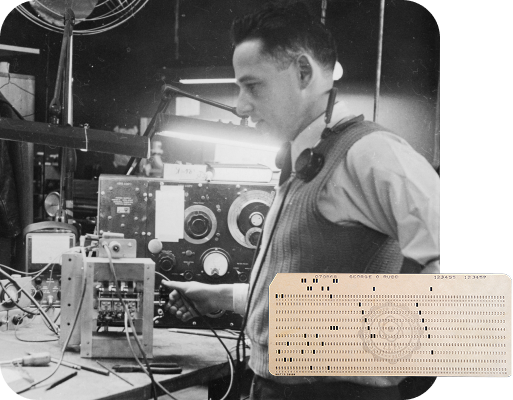
How It All Began
Alfred Dreyfus founds the Electronic Computer Programming Institute in Norfolk, Virginia. As businesses modernize and new technologies reshape how work gets done in the post-World War II era, Dreyfus, an electrical technician, sees firsthand the growing gap between industry needs and available talent. He builds ECPI around the idea of learning by doing, aiming to prepare students for real careers rather than abstract credentials.
1970s
1972
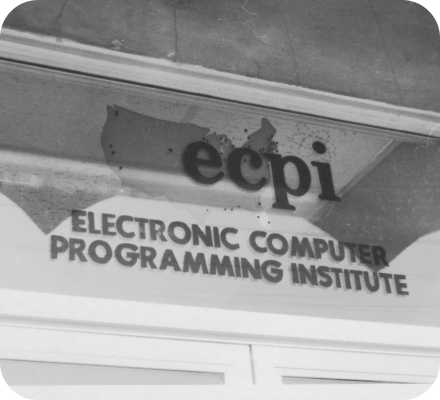
Introduction of Electronics Programs
Anticipating the growing role of technical skills in the workforce, ECPI expands its academic offerings beyond computer programming classes by introducing electronics programs.
1975
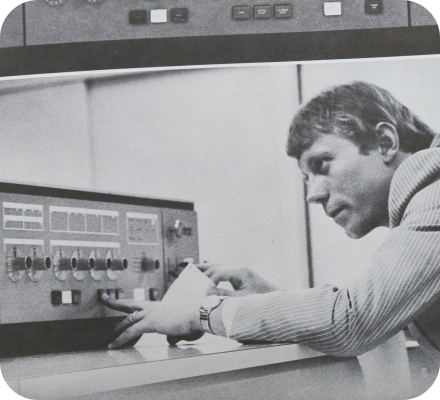
First Advisory Board Launch
ECPI expands its partnerships with employers, integrating industry input more directly into its curriculum and reinforcing the link between education and employment.
1980s
1984

Second Campus Opening
A second campus opens in Richmond, Virginia, an early step toward broader access to career-focused education.
1987
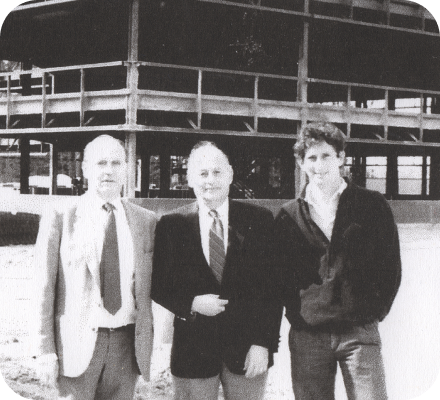
New Home for ECPI
After more than two decades in the JANAF office building in Norfolk, ECPI expands into a dedicated campus building in Virginia Beach, Virginia. The move reflects the institution’s growth and strengthens its capacity to serve more students.
1988

Out-of-State Expansion
ECPI opens a campus in Greensboro, North Carolina, establishing its first presence outside Virginia.

1990s
1990

State Approval Granted
ECPI Computer Institute was approved by the State Council of Higher Education of Virginia to award Associate of Applied Science Degrees in Computer and Information Science and Computer Electronics Technology.
1990

New Generation of Leadership
Mark Dreyfus, Alfred Dreyfus's son, assumes the role of President and Chief Executive Officer, carrying ECPI's founding vision into its second generation.
1992

Introduction of Health Programs
As the need for trained healthcare professionals grows nationwide, ECPI introduces nursing and allied health programs, bringing its learning-by-doing philosophy into a new field of service.
1998

SACSCOC Accreditation* and New Name
ECPI receives accreditation from the Southern Association of Colleges and Schools Commission on Colleges (SACSCOC)* to award associate degrees. As ECPI College of Technology, it continues to grow as a multi-campus institution.
1998

Introduction of Network Security
As internet use grows and businesses depend more on computer networks, protecting digital information becomes a new priority. In response, ECPI College of Technology introduces programs in network security, preparing students for new technical roles focused on keeping data safe.
2000s
2000

Expansion into South Carolina
ECPI College of Technology opens a campus in Greenville, South Carolina.

2000

Introduction of Online Learning
ECPI Online launches, providing a flexible pathway to education for working adults.
2004

Introduction of Bachelor’s Programs
ECPI College of Technology is approved by the Southern Association of Colleges and Schools Commission on Colleges (SACSCOC)* to award baccalaureate degrees, expanding its academic offerings as professional expectations continue to evolve.
2006

Introduction of Culinary Arts**
Through the acquisition of the Culinary Institute of Virginia**, ECPI College of Technology begins offering programs in culinary arts.
2010s
2011

Introduction of Master's Programs
ECPI College of Technology attains university status and is approved by the Southern Association of Colleges and Schools Commission on Colleges (SACSCOC)* to award master's level degrees. To strengthen preparation for advanced careers ECPI University introduces graduate programs in technology and healthcare.
2011
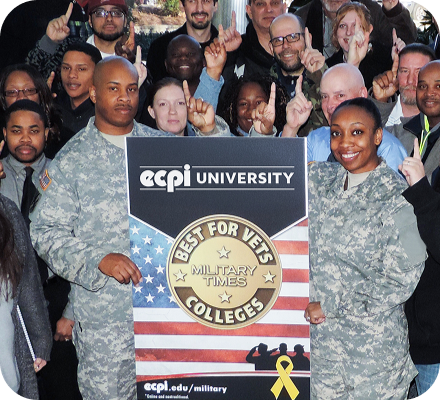
Best for Vets Recognition
For its ongoing commitment to supporting service members, veterans, and their families, ECPI University is recognized as a Best for Vets college by the Military Times.
2016

50th Anniversary
ECPI University celebrates fifty years of career-focused support for students.
2016


2017

Growth of Security Programs
Building on earlier offerings, ECPI University expands its programs from traditional network security to a broader cybersecurity focus, reflecting the increasing complexity of the field and the evolving role of security professionals.
2019


2020s
2021

ABET Accreditation***
ECPI University earns ABET accreditation*** for its bachelor’s degree in Electronic Systems Engineering Technology (ESET), Mechatronics (ESET), and Mechanical Engineering Technology (MET) programs for the online, Newport News, and Virginia Beach campuses.
2026


Present Day

Present Day
To this day, ECPI University maintains the same guiding principle that shaped its beginnings: education must evolve alongside the world it serves, supporting students across different stages of their educational and professional journeys.
*ECPI University is accredited by the Southern Association of Colleges and Schools Commission on Colleges (SACSCOC) to award associate, baccalaureate, and master’s degrees. ECPI University also offers credentials such as certificates and diplomas at approved degree levels. Questions about the accreditation of ECPI University may be directed in writing to the Southern Association of Colleges and Schools Commission on Colleges at 1866 Southern Lane, Decatur, GA 30033-4097, by calling (404) 679-4500, or by using information available on SACSCOC’s website (www.sacscoc.org).
ECPI University’s accreditation status includes all campuses. ECPI University’s accreditation is dependent on the continued accreditation of the parent campus located in Virginia Beach, Virginia. All campus sites, regardless of location or mode of delivery, are evaluated during reviews for the reaffirmation of accreditation. All other extended sites under the accreditation of the parent campus are also evaluated during such reviews.
** College of Culinary Arts of ECPI University
*** The Bachelor of Science in Electronic Systems Engineering Technology at the Virginia Beach and Newport News, VA campuses and Online is accredited by the Engineering Technology Accreditation Commission (ETAC) of ABET, www.abet.org, under the General Criteria and the Electrical/Electronic(s) Engineering Technology and Similarly Named Programs Program Criteria.