




The AI Job Apocalypse Is Coming – Just Not for the Jobs You Think
Every wave of automation in history has been framed as the end of work, and every time, the labor market adapted instead of collapsing.
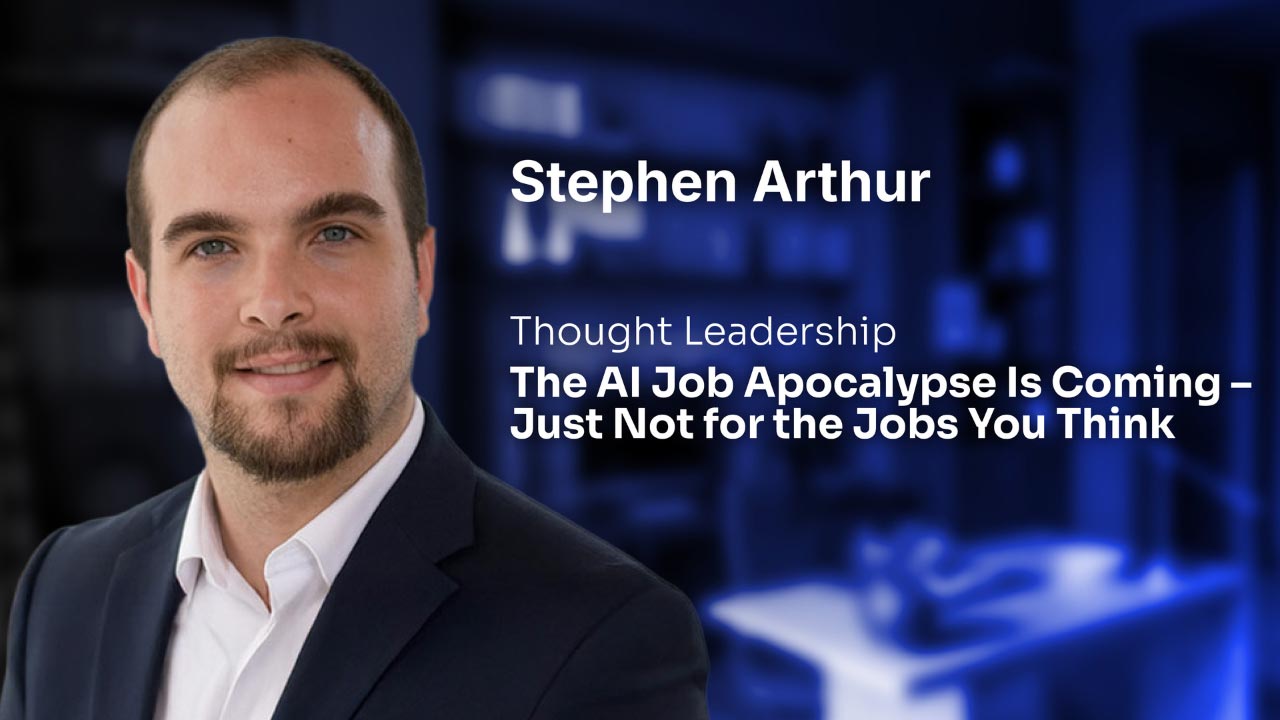
Stephen Arthur, Director of AI and Analytics at ECPI University, argues that the current AI moment deserves the same scrutiny in a recent piece for The AI Journal, a publication covering AI strategy, technology, and leadership for business audiences. His analysis breaks down which jobs are actually at risk and which ones are likely to grow busier, not obsolete.
Read the full piece for Arthur's complete breakdown of which careers are stable, which require attention, and why.
Which jobs are actually at risk from AI?
Not all AI-exposed jobs face the same threat, according to Arthur. The real risk depends on two factors together: how much of the job AI can do, and whether demand for that work grows as it gets cheaper and faster.
Radiology and software development involve exactly the kind of pattern recognition and document generation AI handles well. But that alone doesn't mean the job disappears. What matters is elasticity: does the world want more of a service when it costs less, or does it want the same amount for less money? Arthur argues these roles are elastic, so they sit in the safer zone. Demand rises as AI drops the cost.
The real danger zone is narrower: work like financial audits and contract review, where demand is fixed by regulation or custom rather than price. AI does the same work faster, but no new demand appears to absorb the displaced labor. Fewer people are needed to produce the same output.
For professionals in these roles, Arthur's advice is straightforward: plan for the shift now rather than wait for it.
How is ECPI University preparing students for this shift?
ECPI University recognized early where AI was headed in the workforce and responded accordingly. Last year, more than 35 courses were expanded to integrate AI, building the kind of applied fluency Arthur points to as the real differentiator between workers who benefit from AI and workers who get displaced by it.
AI can make a professional more valuable instead of replacing them. The idea of the AI-augmented professional captures this: the jobs most exposed to AI are often the same jobs where AI gives skilled workers the biggest edge.
Preparing students for today's working world means being realistic about this shift. That takes consistent, ongoing effort, not a one-time fix.