




How Colleges Can Help Student Veterans Overcome Barriers to Degree Completion
When it comes to veterans in higher education, enrollment numbers only tell part of the story. The more meaningful measure is how many make it to graduation. Too often, there is a disconnect between the two.
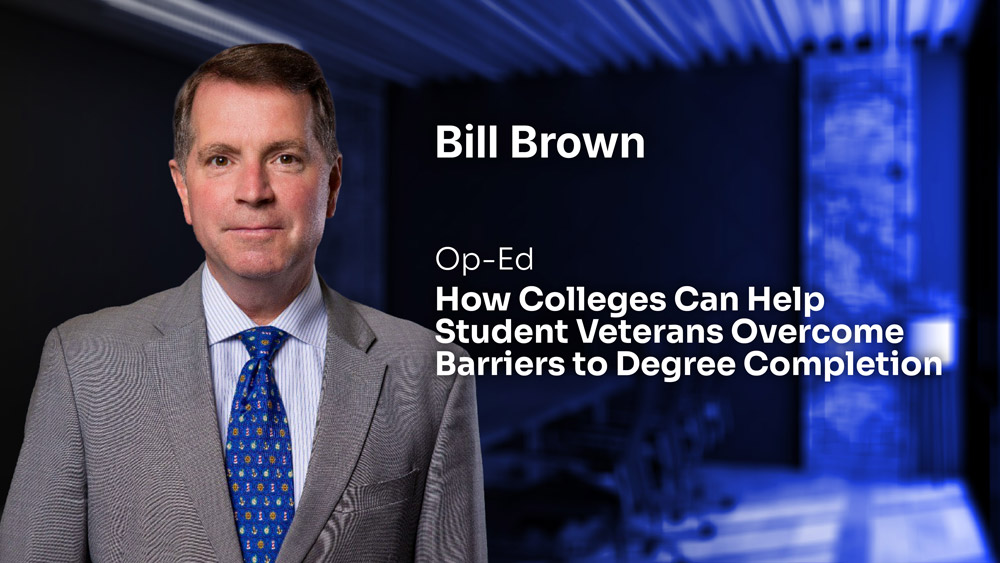
Bill Brown, Executive Director of Military Education at ECPI University and a retired U.S. Army officer, shares his perspective on that gap in a recent piece for Stars and Stripes. The publication is an independent military news organization that has served U.S. troops and their families since World War II.
Read the full piece for Brown's assessment of where the system falls short and what it takes to close that gap.
What challenges do student veterans face in higher education?
More than 900,000 veterans and military-connected students currently use GI Bill benefits to pursue higher education. Just half complete a degree within six years.
Brown identifies three barriers driving that gap: administrative friction, scheduling that wasn't built for working parents, and the kind of isolation that comes from being the oldest person in the room with the most complicated life.
Each one reflects a system designed around a traditional student that most veterans are not. Closing the completion gap means acknowledging that mismatch and building accordingly.
The fixes, Brown argues, are not expensive. But they require institutions to make deliberate choices about where to direct attention and resources.
How does ECPI University support student veterans?
ECPI University has built its approach to military education around the specific realities Brown describes. The university has been ranked among the top 10 Military Friendly Schools in the nation, a recognition grounded in deliberate investment rather than surface-level commitment.
Flexibility is one key part of that investment. Year-round scheduling and online and hybrid options give military-connected students more control over when and how they complete coursework.
Community is the other half of the equation. Student Veterans of America (SVA) chapters across campuses give military-connected students a place to connect with those who understand where they've been. The results have at times extended beyond campus walls, with student veterans bringing their voices directly into policy conversations.
For student veterans, this kind of support makes a measurable difference. Closing the gap between starting and finishing requires action, not just intention.