




College Students’ Technology Experience Is Worse Than DoorDash—And That’s a Problem
Colleges are spending more than ever on student-facing technology, yet most students still describe the experience as clunky and disconnected. In fact, many say they have a better experience using the apps on their phone.
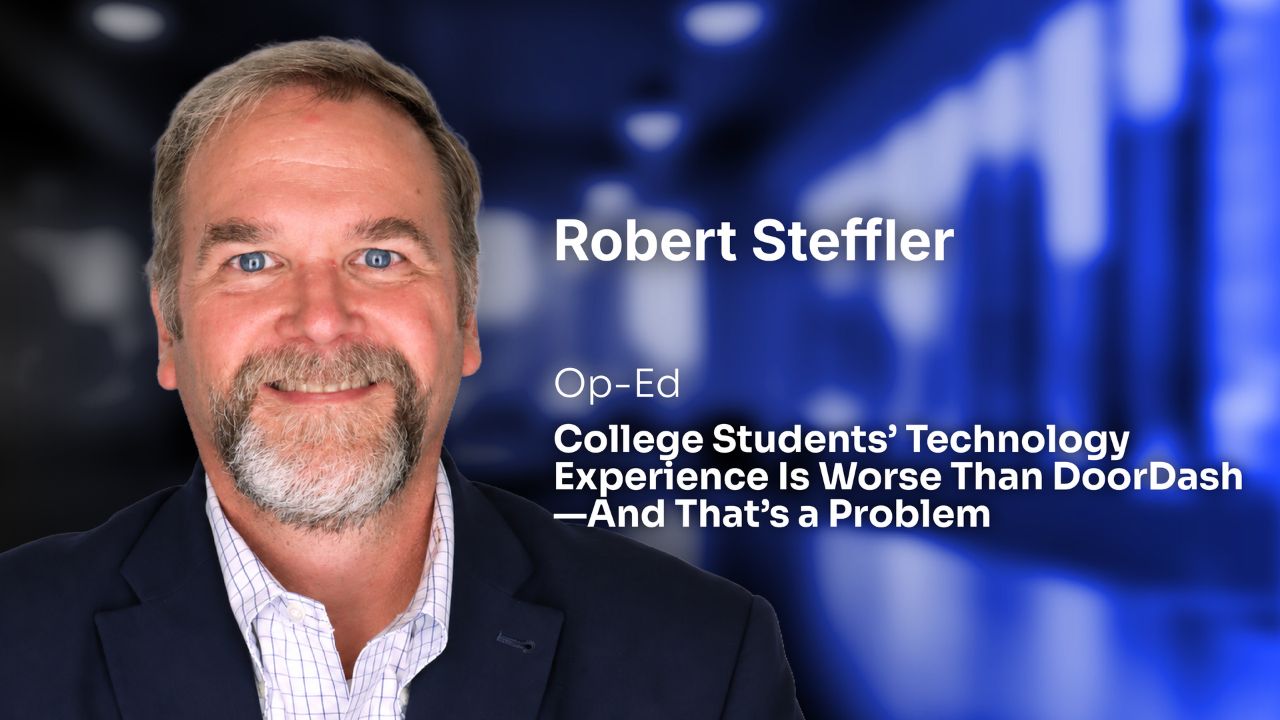
Robert Steffler, Chief Technology Officer at ECPI University, argues that this gap has become a threat to enrollment and completion. He makes the case in an article for The EvoLLLution, an online publication covering the changing higher education industry, publishing work by postsecondary leaders since 2011.
Read the full piece to see what a better student experience with technology looks like.
Why does college technology feel worse than the apps students use every day?
The apps on a student's phone are built to feel effortless, but campus systems aren’t. While DoorDash or Netflix is one smooth experience, college technology is scattered across separate logins and platforms that don’t connect.
Steffler says that this fragmentation is the real problem behind the bad experience students have. They log into one portal for admissions, another for financial aid, others for advising, registration, and payment. Once they enroll, the list only grows.
That mess hits the students who can least afford it. Many students don't have time to waste, and every extra login is a reason to give up.
How is ECPI University reducing technology friction for students?
ECPI University designs its programs and the systems behind them around how students actually engage with technology. Most are working adults in accelerated five-week terms, and many manage their education from a phone between shifts. They need something that isn't complicated.
At ECPI University, a single login brings grades, schedules, and library access together in one place that’s made to work on a phone. This ensures students can keep track of their progress as they move about their busy days.
The same thinking extends to other parts that often cause stress, such as registration. Rather than having students compete for open seats, the University maps each student's full path from the start and places them in the appropriate classes along the way.
Together, these systems provide a student-first experience that makes sense and lets them focus on their coursework instead of figuring out how everything even works.