




Colleges Must Prepare Students to Be AI Change Agents, Not Just AI-Literate
Companies everywhere are adopting AI faster than their teams can put it to work, and the gap between the two is reshaping what employers expect from new hires.
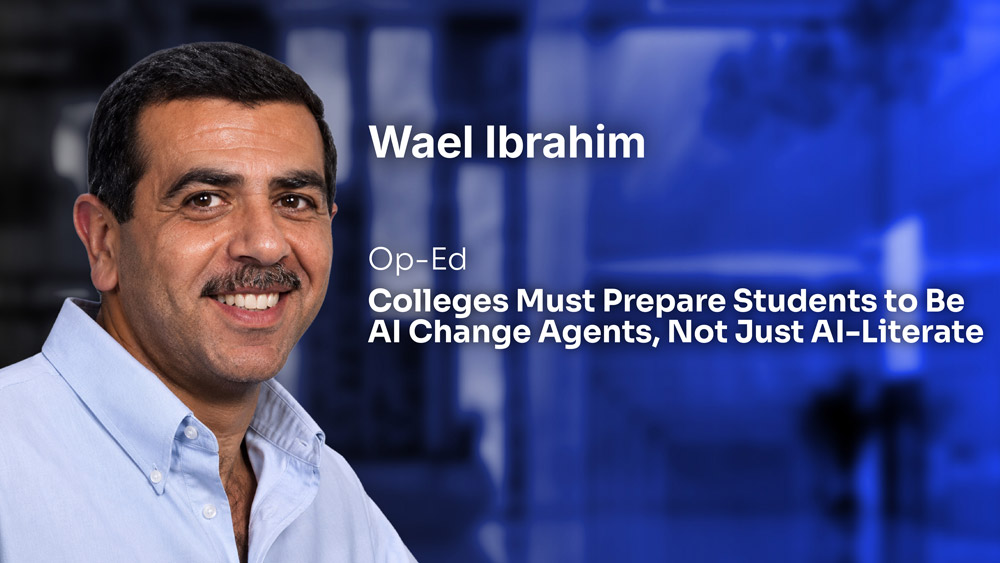
Dr. Wael Ibrahim, Dean of the School of Engineering Technology at ECPI University, recently authored an op-ed making the case that colleges should prepare students to be AI change agents, not just AI-literate. The piece ran in The EDU Ledger, a higher education news publication that covers students, faculty, and leadership across postsecondary institutions.
Dr. Ibrahim's full argument lays out what applied AI training should look like and why industry partnerships are central to it.
Why isn't basic AI literacy enough to stand out in the job market?
A basic familiarity with AI tools no longer separates a strong candidate from the rest. Employers now assume graduates can use the technology. What they struggle to find are people who can apply AI in practical ways and judge whether what it's producing is useful.
That distinction, knowing AI versus actually using it, is the line employers now hire on. The stakes are rising as AI automates the entry-level tasks that once belonged to junior employees. Graduates who arrive with only the basics may find fewer entry-level opportunities available to them.
Versatile and technically trained graduates hold an advantage here. A graduate who can fix a factory robot and also tell whether a new AI tool would actually save the company time and money is a very different hire from one who can only do the repair.
How is ECPI University preparing students to apply AI?
ECPI University designs engineering technology programs around this kind of work, updating offerings as industry needs evolve. In February 2026, the Master of Science in Engineering Technology program launched to prepare students for advanced roles in automation and modern manufacturing.
The program reflects ECPI University’s broader approach to AI education: place the technology in the context where students will use it and keep human judgment at the center. That means preparing students to evaluate AI output and make informed decisions based on the results.
Technical capability and human judgment together are what prepare students to take an active role in how AI is applied in their fields.