




Knowing AI Isn't the Same as Using AI: Insights from NVIDIA GTC 2026
Key Takeaways
Attending NVIDIA GTC 2026, ECPI recognizes the critical distinction between theoretical AI knowledge and practical AI application in real-world work contexts.
- Simply accessing AI tools like chatbots is insufficient; understanding practical application matters more
- Agentic AI systems are advancing toward autonomy while users gain control through clearer task specification
- Interaction with AI tools (active engagement) differs fundamentally from passive exposure
- ECPI's focus is on teaching students how to use AI tools effectively in their professional contexts
We’re quickly reaching a point where AI is no longer a stranger at our doorstep. Everyone from educators to industry leaders has been reminding us that AI is on the way, or that it’s already here. But I doubt a knock on the door is going to surprise anyone anymore. AI is an expected visitor, and we should welcome it as a good host would.
What the conversation needs to shift towards is what to do with AI now that it’s here. Exposure doesn’t mean much if no value comes out of it.
In some ways, we’ve mistaken familiarity for readiness. AI use is increasingly common, and the tools and platforms we rely on every day, like smartphones, web browsers, and social media, seem to gain new AI integrations every month.
This begs an important question: does interacting with AI translate into the ability to apply it in meaningful ways? This distinction is ultimately what matters most.
As AI systems grow, so will the expectations placed on people working alongside them. It’s not enough to know how to access AI or how to prompt a chatbot. The real measure is whether people can understand where it fits within their work and how to utilize it for those purposes.
Where AI Is Headed
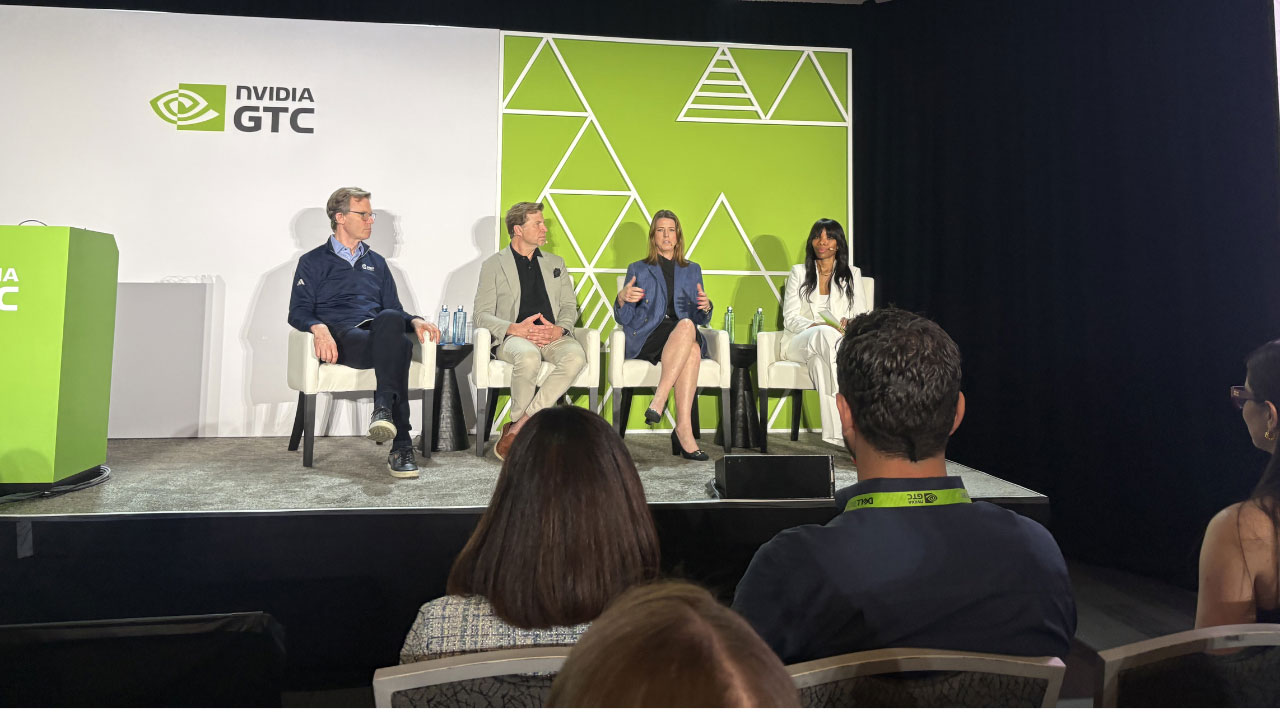
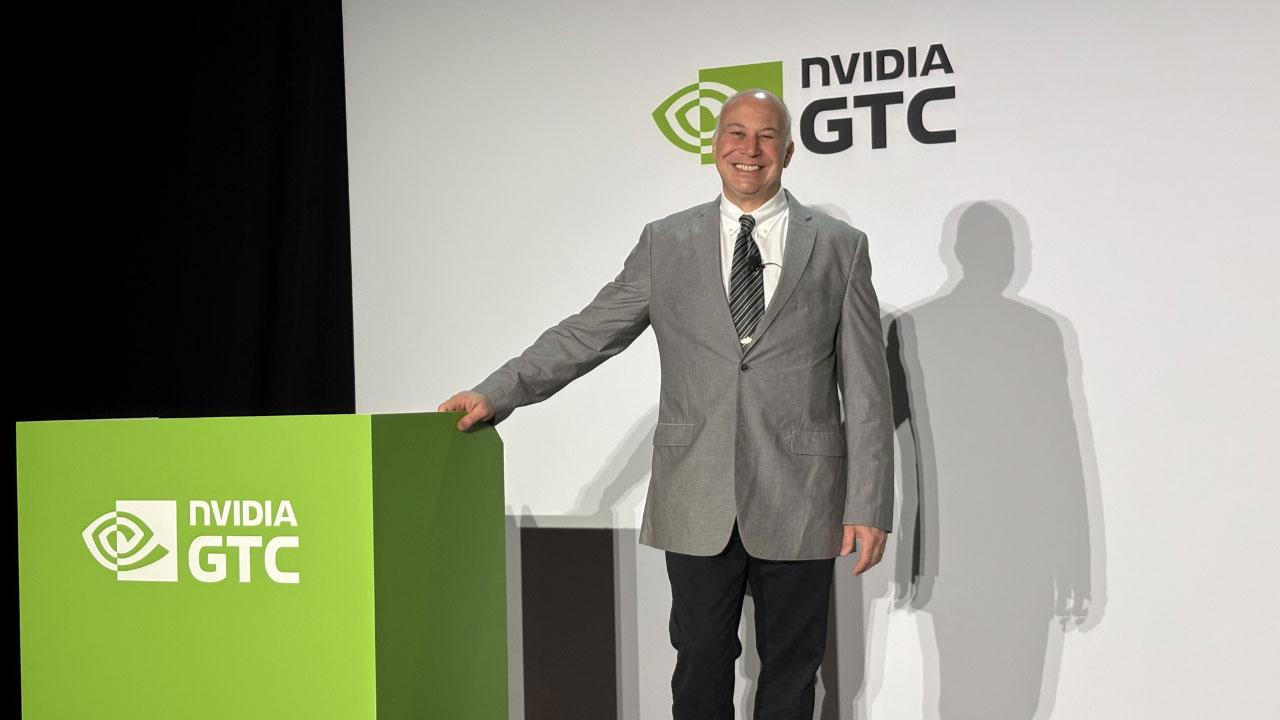
I recently had the great opportunity to attend NVIDIA GTC 2026, an AI conference that brought together professionals from across the globe to share their discoveries, projects, and visions for the future. It was a truly energizing week, and I got a chance to see many exciting developments taking shape in real time.
The conversations throughout the week reflected a noticeable shift in how the technology is being approached. Instead of standalone models or chatbots, much of the attention was on agentic AI. These systems carry out tasks with more autonomy than ever. In turn, users will gain more control, as they can simply explain the work they want done.
I expect to see these agents take over many of the mundane business tasks that are already procedural. As many have noted before, I don’t believe this change will eliminate jobs. Instead, it will reduce the kind of repetitive work that often limits how people spend their time.
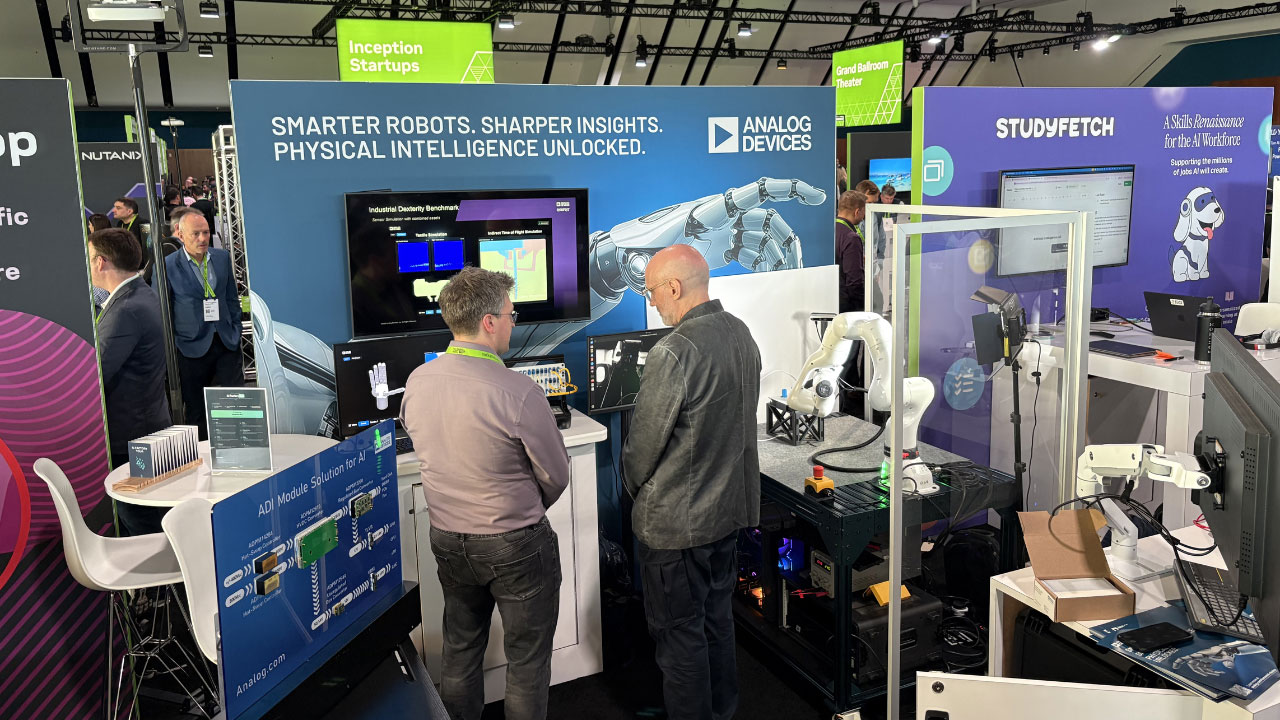
At the same time, AI is moving beyond the realm of software and into the physical world. Presenters demonstrated some incredible applications in robotics and simulations that show how these physical systems can interact with real environments.
What happens next for agentic AI is largely a question of scale, and that requires a more integrated system. It’s going to depend on professionals who understand the context of their work, an infrastructure that is optimized for growth, and enough oversight to ensure robust evaluation and reliability.
These discussions are all ongoing, but each of us plays a role in how we’re contributing to the conversation. For my part, I focused on the work that we’re doing at ECPI University.
Training AI Professionals at ECPI University
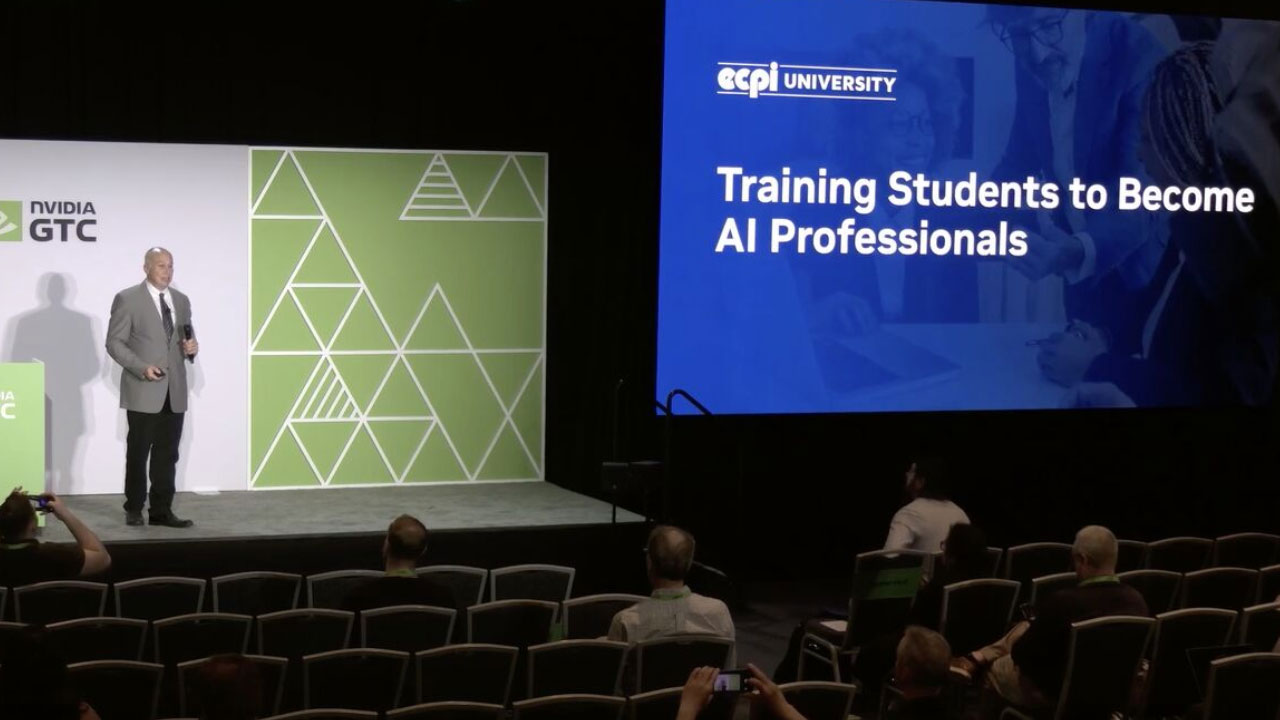
AI is already showing up across just about every industry, which means learning how to work with it must start earlier. At ECPI University, that’s something we’ve been building into students’ coursework. We're focused on actually using these tools rather than just talking about them.
Since 2022, I’ve been an NVIDIA Deep Learning Institute Ambassador. A big part of that work involves leading intensive workshops where students use NVIDIA-provided GPUs to build, train, and test various AI solutions.
These sessions aren’t typical workshops. I often tell students upfront that this isn't a “lean-back” webinar: it’s a “lean-forward” experience. They run for a full eight hours and are designed to be completely immersive. Students work directly with the technology, not just watch someone else do it.
The students in these sessions come from a wide range of backgrounds. Some are in technical fields like engineering, IT, or cybersecurity, while others come from our business or medical programs. It’s a mix you wouldn’t always expect to see in the same room.
Inside the NVIDIA AI Workshops
There are a number of different workshop options available. Students can choose the ones that are right for them based on their interests and what they’re hoping to explore or build.
Those who are looking for more advanced paths start with the Fundamentals of Deep Learning. From there, the workshops branch into more specific applications, like anomaly detection for cybersecurity and diffusion models for images and complex generative AI.
Each workshop ends with a practical assessment. Students who pass earn a numbered, traceable NVIDIA certification. These certifications are valuable in the workplace because they’re proof of what students can actually do, not just what they’ve been exposed to.
Since I started teaching these workshops, I've worked with more than 1,000 students through more than 20 sessions. The workshops continue to fill up quickly. In line with recent developments, I’m also leading new workshops focused on building agents that use large language models (LLMs).
Because not everyone wants to be a developer, we also hold interdisciplinary seminars. In one seminar, we created Chef’s Buddy, where AI is used to generate recipes and plating visuals. The goal is to help students, especially those outside of technical programs, see how these tools have applications within their own industries.
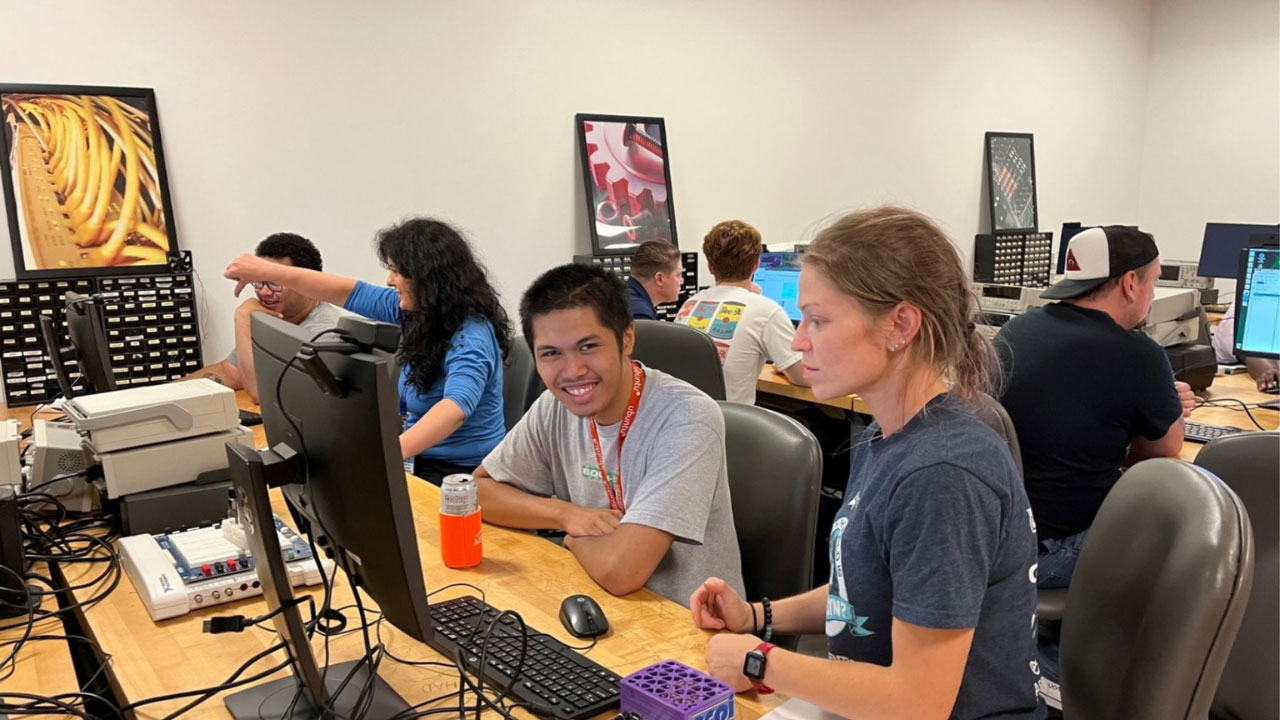
Another seminar we’ve held in the past was based on the NVIDIA Jetson device, like the ones in modern cars for emergency braking and lane assist. Just as extensive real-world data must be collected for automotive applications, with Jetson, the students collect the data to train the AI.
One of my favorite exercises is having students train an AI model to recognize thumbs-up and thumbs-down hand gestures from the dozens of examples the students gathered. Just when they think they’ve nailed it, I step in wearing a wildly patterned shirt to see if the model still holds up. It’s a simple way to show them the importance of variation in training data.
Looking Ahead
What’s happening with AI in industry isn’t separate from what’s happening in the classroom. From what I experienced at NVIDIA GTC, the conversations technology professionals are having aren’t only relevant to the people building these systems. They’re relevant to anyone who will be interacting with them.
We should remember that interacting is the operative word there. Interaction is an active process, and exposure is only passive. There’s a big difference between seeing what these AI systems can do and understanding how to work with them in context. That difference is where the value lies.
I’m excited to see how these AI systems continue to develop. It still feels like we’re only beginning to see what they can become. What I’m most excited about, however, is the kind of creative work that students will produce as a result. I’ve already seen some impressive outcomes, and I expect there will be many more that surprise me.
About the Author: Paul Nussbaum, PhD
Dr. Paul Nussbaum is an Electronics and Mechatronics Engineering Technology faculty member at ECPI University. He has also held various Director roles as the University needs arose, including programs, academic affairs, and faculty development, and volunteers as an ABET Program Evaluator.
Dr. Nussbaum is an experienced software and hardware product manager, having worked in that capacity by leading teams of senior contributors for small startups as well as large multi-national companies including Cisco and Ericsson. His recent programming work in artificial intelligence (AI) seeks to improve performance, but also to simplify and explain pattern recognition, neural networks, and machine learning in easy-to-understand ways that are accessible to non-programmers.
Since February 2022, Dr. Nussbaum has been an NVIDIA Ambassador, providing instructor-led beginner and advanced workshops in artificial intelligence, such as anomaly detection, predictive maintenance, and generative diffusion models. He is currently ranked as a “Platinum” Ambassador, NVIDIA's Deep Learning Institute's highest level.
