




AI Is Raising the Price of Entry into the Workforce. Education Must Lower It.
Artificial intelligence (AI) is reshaping the labor market faster than many workers and institutions can adapt. As employers rethink entry-level hiring and workforce expectations evolve, questions about who will benefit from AI and who may be left behind are becoming increasingly urgent.
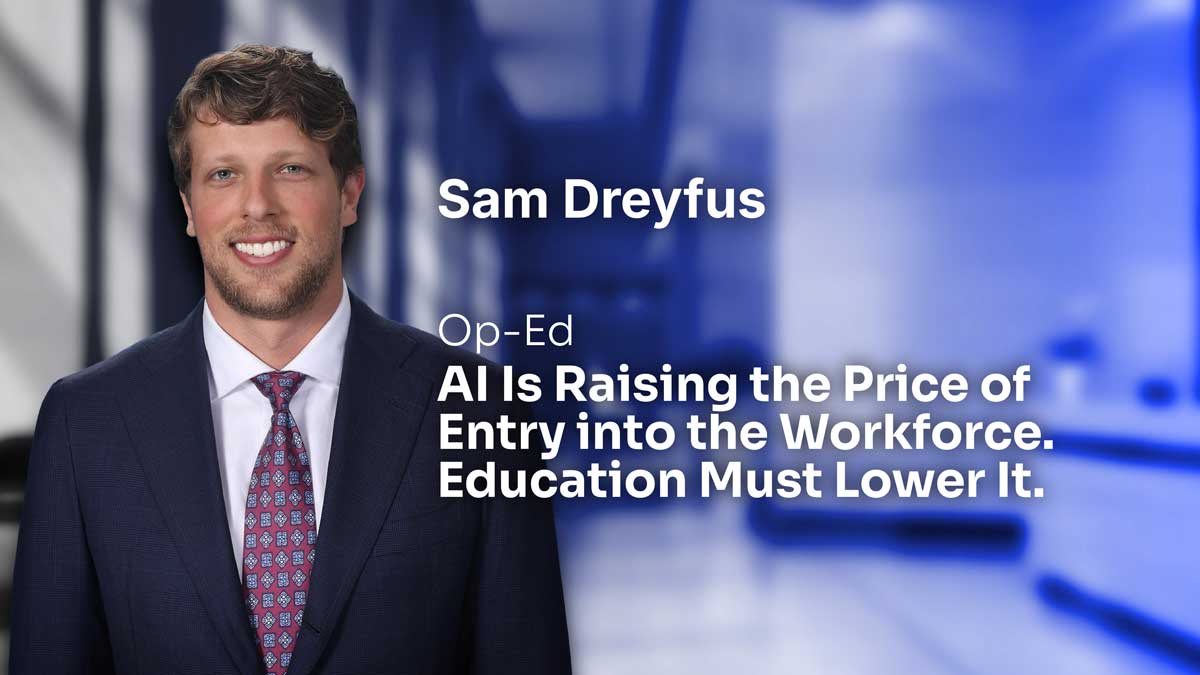
Sam Dreyfus, ECPI University’s Executive Vice President, addresses these concerns in a recent opinion piece published by The Hill, a national publication covering politics, policy, and public affairs,
In his piece, Dreyfus argues that higher education has a responsibility to help workers navigate this transition and ensure technological progress does not narrow access to economic opportunity.
What is AI actually doing to the workforce?
AI is not eliminating the need for workers, but it is raising expectations for what workers need to bring on day one. Some companies are reducing entry-level roles while mid-career transitions are becoming harder to navigate, limiting the path to stable, upwardly mobile work.
The workers who are most at risk are those who can least afford to be left behind, such as first-generation students, career changers, and adult learners.
If technology accelerates productivity but narrows access, the labor market becomes more rewarding for those already prepared and less forgiving for everyone else.
What does this mean for higher education?
Higher education has to respond to where the labor market is going, and it must be intentional about it. The traditional sequence of earning a degree, getting hired, and then learning on the job is becoming less reliable.
Institutions need tighter connections with employers, faster program updates, and more opportunities for students to graduate with demonstrated skills. Having the credentials to apply for a job is one thing, but having the capability to perform is another.
The market is increasingly rewarding graduates with a depth of knowledge in a specific field alongside strong human skills like judgment, communication, and creativity, which AI still struggles to replicate. AI literacy is also quickly becoming a differentiator for early-career workers.
How is ECPI University approaching this challenge?
ECPI University approaches this challenge from the perspective that career preparation cannot be separated from the realities of the labor market. As AI changes how companies hire, train, and evaluate workers, education has to keep pace with those shifts.
Over the past year, AI has been integrated across more than 35 courses at ECPI University, with continued expansion underway. The effort reflects a broader recognition that AI literacy is becoming part of workforce readiness across a growing number of professions.
The opportunity AI creates is real. So is the risk that not everyone gets to participate in it equally. The role of education is to help widen access to that opportunity rather than allow it to narrow further.