




Why Higher Education Must Teach Students to Work with AI in Cybersecurity and Beyond
Key Takeaways
Higher education is falling behind the modern workplace by treating AI as a threat to academic integrity rather than a tool students must learn to use responsibly. Universities, particularly cybersecurity programs, must shift from AI avoidance to structured AI fluency in order to produce graduates who are genuinely workforce-ready.
- The workplace has already adopted AI across industries, and graduates who lack practical AI skills are entering a world they were not trained for.
- Treating AI as an integrity problem misses the larger risk: students who never learn to use AI professionally are more likely to use it recklessly after graduation.
- Cybersecurity programs face a dual obligation, requiring students to both use AI for defensive work and understand how to secure AI systems against attack and manipulation.
- Supervised, structured AI use in the classroom builds better judgment than avoidance, letting students learn where AI fails before the stakes are high.
- The goal is not blind enthusiasm for AI but governed competence, meaning students who know when to trust AI, when to verify it, and when human judgment must take over.
The old classroom is starting to look like a museum.
Not because the professors are outdated. Not because the curriculum lacks value. It looks like a museum because the workplace has changed faster than the syllabus.
In offices, labs, security operations centers, consulting firms, and software teams, people are already using AI to draft reports, summarize findings, accelerate research, organize data, support decisions, and automate pieces of daily work. Employers are not sitting still while academia debates whether AI belongs in the room. They have already pulled up a chair for it.
This shift affects every discipline, but it matters especially in cybersecurity. The cybersecurity workforce is no longer being asked only to secure networks, endpoints, and cloud environments. It is also being asked to use AI for analysis and defense, while at the same time securing AI systems against misuse, manipulation, and attack.
That means students entering cyber programs are preparing for a profession that now has two linked obligations: use AI well and secure AI well.
Higher education now faces a simple choice: teach students how to work with AI responsibly, or send them into the workforce prepared for a world that no longer exists.
How is higher education falling short on AI?
This is where some colleges and universities get stuck. They treat AI as if it were mainly an academic integrity problem, a temptation to police, a shortcut to fear, a machine students must learn to avoid touching.
That mindset is understandable, but it is too small for the moment. The real challenge is not that students might use AI. The real challenge is that they might graduate without learning how to use it professionally, critically, ethically, and securely.
EDUCAUSE’s recent research shows that AI is already deeply present in higher education work. In its January 2026 report, 94% of respondents said they had used AI tools for work-related tasks in the prior six months. However, 56% reported using AI tools not provided by their institutions, which EDUCAUSE flags as a risk area for privacy and cybersecurity.
Those are not signs of a future problem. They are signs of a present reality.
The question, then, is not whether higher education should acknowledge AI. The question is whether institutions will shape student use in ways that reflect real-world expectations.
Why is AI critical in cybersecurity education today?
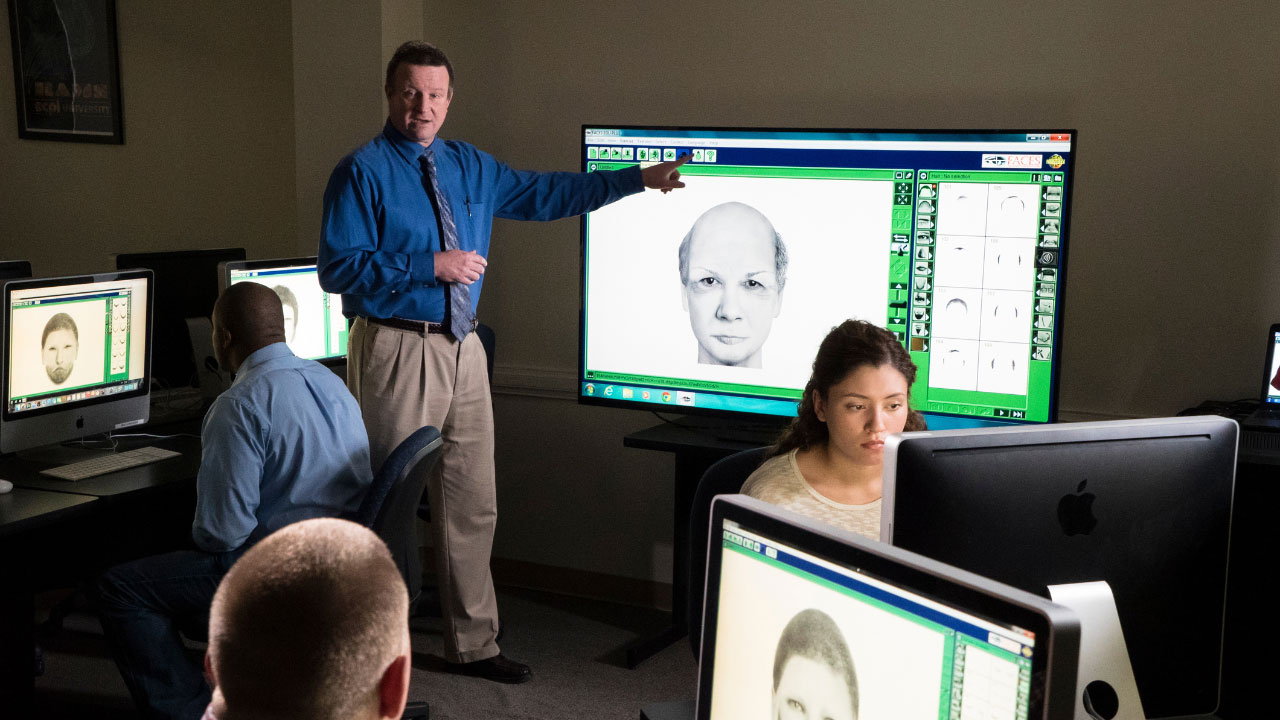
Cybersecurity is one of the clearest examples of why higher education must move from AI avoidance to AI fluency. In the field, AI is increasingly relevant on both sides of the mission.
Security teams may use AI to speed alert triage, summarize incident data, detect anomalies, assist with reporting, or accelerate threat analysis. At the same time, those same professionals must understand how AI systems themselves can be attacked, manipulated, poisoned, overtrusted, or misused.
NIST has said this directly: the cybersecurity workforce needs to be prepared both to secure AI against cyberattacks and to mitigate cyber threats presented by AI, while also using AI to improve cybersecurity work such as data analysis and anomaly detection.
Imagine two graduates entering a security operations center. One has been told for four years that AI is suspicious and best avoided. The other has practiced using AI to summarize logs, compare incident notes, draft reports, and accelerate research, while also learning where AI can hallucinate, expose data, or create false confidence.
Which one is more prepared for the real environment? Which one is more likely to use AI recklessly because nobody ever taught them how to use it well? The irony is hard to miss.
Sometimes the student most “protected” from AI in school is the least prepared to handle it safely after graduation.
Why does AI literacy now matter in the workplace?
A graduate who enters today’s workforce will likely encounter AI in some form almost immediately. Maybe it will be a writing assistant. Maybe a coding copilot. Maybe a research summarizer, a data analysis layer, or a workflow tool embedded into software the employee uses every day.
The names will change. The interfaces will evolve. The expectation will remain the same: modern professionals will be expected to know when AI helps, when it fails, when it should be checked, and when it should not be trusted at all.
Federal policy is moving in that direction too. OMB’s 2025 guidance on federal AI use emphasizes responsible adoption and safeguards, not avoidance, and frames AI use as something that must be governed according to risk. That is a useful model for higher education.
The goal is not blind enthusiasm. The goal is governed competence.
Students do not need to become machine learning engineers to be AI-ready. They do need to understand how to use AI the way organizations use it in practice:
- to draft and revise communication,
- to analyze information more quickly,
- to accelerate research and synthesis,
- to support decision-making,
- to organize and interpret data,
- and to automate repeatable parts of workflows.
That kind of preparation is not academic compromise. It is career realism.
Is teaching AI use the same as letting AI do the work?
This is where the conversation often gets muddy. Some educators hear “integrate AI” and imagine the collapse of rigor. They picture students outsourcing thinking, skipping struggle, and submitting polished nonsense they did not truly create.
Those risks are real. But the answer is not to pretend AI will stay outside professional life. The answer is to teach students how to engage it with discipline.
In the real world, competent professionals do not simply ask AI for an answer and walk away. They review. They verify. They challenge. They compare. They document. They decide.
That is exactly how higher education should frame AI use. Students should be taught to use AI like a junior assistant: fast, helpful, sometimes impressive, sometimes wrong, always in need of supervision.
A strong classroom model does not say, “Do not use AI.” It says, “Use AI, but show your reasoning. Document your prompts. Explain what you accepted, what you rejected, and why.”
That mirrors how modern organizations are increasingly treating AI use: not as magic, but as a tool that still requires human judgment, accountability, and review.
What skills are employers actually asking for?
What employers increasingly want is not a graduate who can merely name AI tools. They want someone who can operate in an AI-shaped environment.
That means a graduate who can ask better questions, evaluate outputs, identify risk, use automation responsibly, and understand when a fast answer is not a trustworthy answer.
In cybersecurity, that also means someone who understands that AI changes data handling, incident response, software review, threat modeling, governance, and operational decision-making.
Put more simply, employers do not just need students who can “use ChatGPT.” They need students who can think in a workplace where AI is present.
The workforce signal here is not subtle. NSF’s new CyberAICorps Scholarship for Service program explicitly states that the nation faces a talent shortfall in both AI and cybersecurity and defines “CyberAI” as both using AI in cybersecurity and providing security and resilience for AI systems.
The program supports scholarships and educational innovations that integrate AI and cybersecurity training to prepare a skilled workforce for government missions. When federal workforce development programs are being redesigned around that combined need, universities should pay attention.

What should higher education actually teach about AI?
If universities want to prepare students for modern work, AI integration should be intentional and structured. Students should practice AI use the way responsible organizations expect professionals to use it.
That includes teaching students how to:
- write effective prompts and refine them,
- verify AI-generated information against trusted sources,
- disclose and document AI assistance,
- protect sensitive or restricted data,
- assess when AI output is incomplete or misleading,
- use AI to accelerate research without replacing critical thinking,
- and apply human judgment before action.
For cybersecurity programs, add another layer:
- using AI for log review and incident reporting,
- testing AI-generated code for security issues,
- understanding AI-specific threat models,
- recognizing privacy and governance risks,
- and learning how AI-aware defense differs from traditional cyber defense.
NIST’s recent cybersecurity guidance for the AI era reflects this larger shift. Its Cyber AI Profile focuses on securing AI systems, using AI to enhance cyber defense, and proactively thwarting AI-enabled cyberattacks.
That three-part framing is useful for universities because it gives academic programs a clean way to connect classroom learning to real operational needs.
The real risk is not student exposure to AI; it is unmanaged exposure after graduation
There is a quiet mistake institutions can make here. They assume that restricting AI in school preserves rigor, then act surprised when graduates enter the workforce and start using AI without training, context, or guardrails.
That is not protection. That is delayed risk.
A better model is supervised exposure. Let students use AI in bounded ways. Require them to reflect on the process. Make them defend their decisions. Ask them to compare AI output against source material. Show them where the machine fails. Show them where bias, error, and fabricated confidence creep in.
In other words, make AI part of the learning environment so students can build judgment before the stakes are higher.
This is already close to how higher education itself is evolving. EDUCAUSE found in 2026 that most institutions have work-related AI strategies and that many are focusing on upskilling or reskilling existing staff and faculty.
That should send a message to academic leaders: if institutions themselves are treating AI capability as a workforce issue, then student preparation should follow the same logic.
What does this mean for university leadership?
For leaders, the issue is bigger than classroom tactics. It is about institutional credibility. A university that claims to prepare students for the modern workforce cannot ignore one of the most rapidly embedded technologies in that workforce.
That does not mean turning every class into an AI class. It means recognizing that AI is now part of how work gets done and designing curricula that reflect that reality.
The strongest institutional posture is neither panic nor surrender. It is guided integration.
That means clear policies, faculty development, role-appropriate assignments, ethical boundaries, cybersecurity awareness, and discipline-specific application.
It means helping faculty move from “How do I stop students from using this?” to “How do I teach students to use this responsibly in ways that strengthen learning?”
It also means recognizing that AI policy without AI literacy is just paper.
Higher education is not losing the argument by teaching AI well

There is a fear beneath all of this that if universities normalize AI use, they will weaken education itself. But the opposite can also be true.
Done well, teaching students to work with AI can sharpen evaluation, strengthen reflection, improve process transparency, and make assignments more authentic to the world students are about to enter.
The future professional will not win by being the person who never touched AI. The future professional will win by being the person who knows when AI is useful, when it is dangerous, when it needs verification, and when human judgment must take the wheel.
In cybersecurity, that distinction matters even more because the field now demands professionals who can both benefit from AI and defend against its risks. NIST and NSF are already signaling that this dual capability is part of the workforce the country needs.
Higher education does not need to worship AI. It does need to stop pretending that students will be better prepared by learning around it instead of through it.
The old classroom is starting to look like a museum only if it refuses to move.
The modern workplace has already made its choice. Universities now need to make theirs. Teach students to use AI with judgment, integrity, and discipline, and they enter the world ready. Teach them to avoid it entirely, and someone else will teach them on the job, usually faster, messier, and with far less room for error.
About the Author: Joe Guerra
Joe Guerra is a senior cybersecurity and software engineering professional and an adjunct faculty member of computer and information science at ECPI University. His work spans cloud security, incident response, and secure software delivery, with a focus on integrating security into modern systems and workflows. He brings a practitioner’s perspective to bridging security, engineering, and education.
