




The Manikins Training Tomorrow's Nurses Are More Lifelike Than You Think
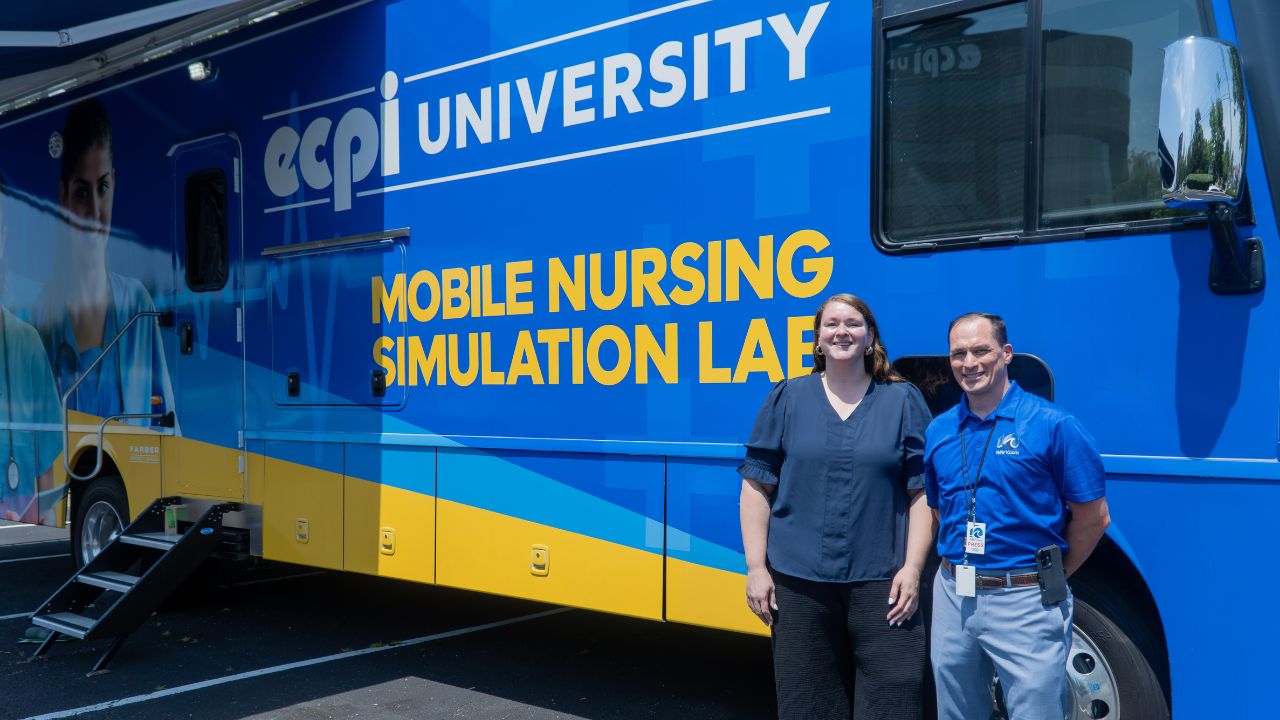
Simulation technology in healthcare education has reached a point where manikins can cry, change facial expressions, and track movement in a room.
Stephanie Raj, Manager of Simulation Operations at ECPI University, recently welcomed WAVY meteorologist Jeremy Wheeler to the university’s Mobile Simulation Lab as part of his ongoing WAVY Science Lab, an educational video series produced by WAVY-TV 10 in which Wheeler explores the science behind everyday materials and technologies.
The Mobile Simulation Lab is one of the university’s responses to a nursing shortage that Hampton Roads has been feeling for years.
In the latest episode on synthetic materials, Wheeler covers rubber, plastics, nylon, and more before arriving at what he calls the most surprising example of all: synthetic humans.
What can high-fidelity medical simulators actually do?
Medical training manikins have come a long way from the plastic dummies that most people picture. Today, they can breathe, produce a real pulse, and respond to what students do to them.
The ones Wheeler saw at ECPI University's Mobile Simulation Lab are made from silicone, metal, and plastic, and built to behave like a real patient. The infant manikin is especially striking. It breathes and cries, and has a soft spot at the top of the head where a pulse can be felt. In a real neonatal emergency, that is sometimes the only place to check.
The same materials Wheeler traced through tires and rain jackets are what make it possible to train nurses without putting patients at risk.
How does ECPI University use simulation-based training to prepare nursing students?
ECPI University builds simulation into its nursing programs so that students develop clinical judgment before they are ever responsible for a real patient. Simulation-based training works because it closes the gap between learning and doing. A student who has already handled the equipment and practiced reading a patient enters a clinical setting with a different level of readiness than someone encountering those situations for the first time.
The Mobile Simulation Lab takes that training on the road. Instructors run scenarios from a control room inside the unit, adjusting conditions in real time while students work through what is in front of them. The lab travels to schools, career centers, and community partners across Hampton Roads, including organizations that could not otherwise offer this kind of training.
Hampton Roads faces real nursing shortages, and the students coming through programs like this are part of what closes that gap. The more opportunities there are for practical clinical training, the better prepared the next generation of nurses will be.