




How Higher Education Can Close the Workforce Gap
Employers across healthcare, technology, and the skilled trades say they struggle to fill open roles, even as millions of capable adults are ready to contribute.
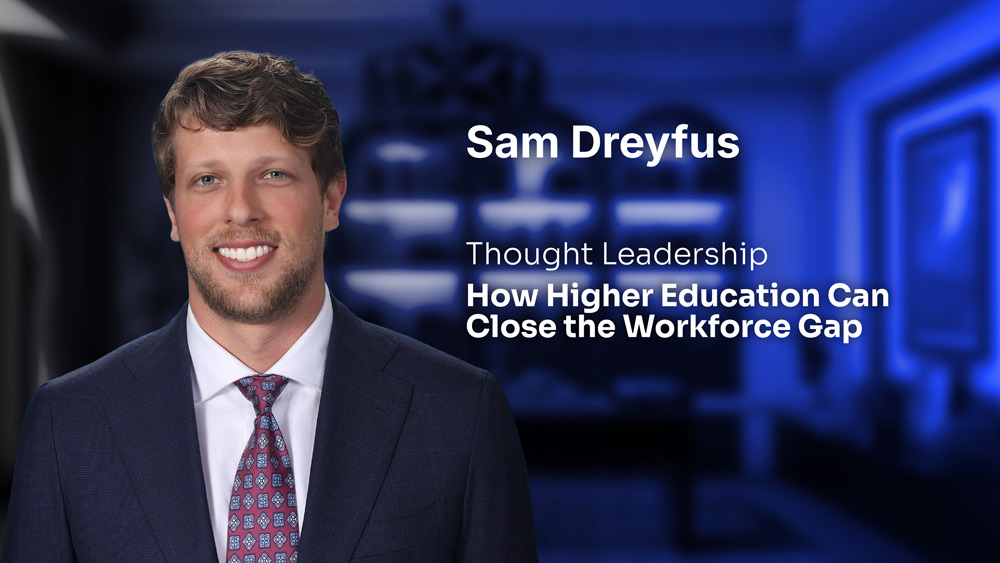
Sam Dreyfus, Executive Vice President of ECPI University, spoke about that disconnect in a Q&A with The EvoLLLution, an online publication that has covered the transforming higher education industry since 2011. Founded by Modern Campus, it features articles and interviews from higher education leaders who give their insight and expertise on the future of the field.
Read the full conversation to learn more about what it takes to prepare today's learners for their careers and how institutions can better align what they teach with what the workforce needs.
Is the workforce gap a talent shortage or a problem of design?
According to Dreyfus, the gap is a problem of design. He argues that the country has plenty of capable people but lacks clear pathways connecting them to the jobs employers are trying to fill.
He traces much of that back to who higher education was built for. The old model assumes an 18-year-old who moves onto campus and studies full-time for four years, but today's learner is more likely to be working, raising kids, or switching careers in their 40s. Treating them as exceptions is what widens the gap.
AI is reshaping the landscape too. As Dreyfus puts it, "AI is raising the price of entry into the workforce, and education's job is to lower it." With more routine tasks being automated, he expects employers to value communication skills and AI literacy more than ever.
The institutions that close the gap will be the ones willing to rethink who higher education is actually for.
How does ECPI University design the student experience around today's workforce?
ECPI University designs its programs around two realities at once: who students are, and what employers in their field need. Many of its students are working adults who can't afford a slow pace, so programs are built to keep them progressing. They develop real job skills in conditions that reflect the work itself.
Some of that work now involves AI. The emphasis is on real AI literacy, using the tools while building the judgment to evaluate what they produce. ECPI University has built a framework defining how students can use AI across their coursework rather than leaving faculty to sort it out course by course. That now includes conversational assignments, where students move through material with an AI tutor and get feedback in real time.
ECPI University also treats communication and other human skills as central to the work instead of something additional. In its healthcare programs, simulation-based training gives students a way to practice team-based care. The cohort model reinforces this, moving students through a program as a steady group and building the kind of collaboration that real workplaces often demand.
Just as workforce needs rarely stand still, ECPI University's programs continue to adapt and evolve alongside the fields they prepare students to enter.