




How To Improve Graduation Rates, Salaries & Employment
The cost of a degree keeps climbing, and so does the debt students carry to earn one. That has put pressure on colleges to prove a program pays off in real jobs at real wages.
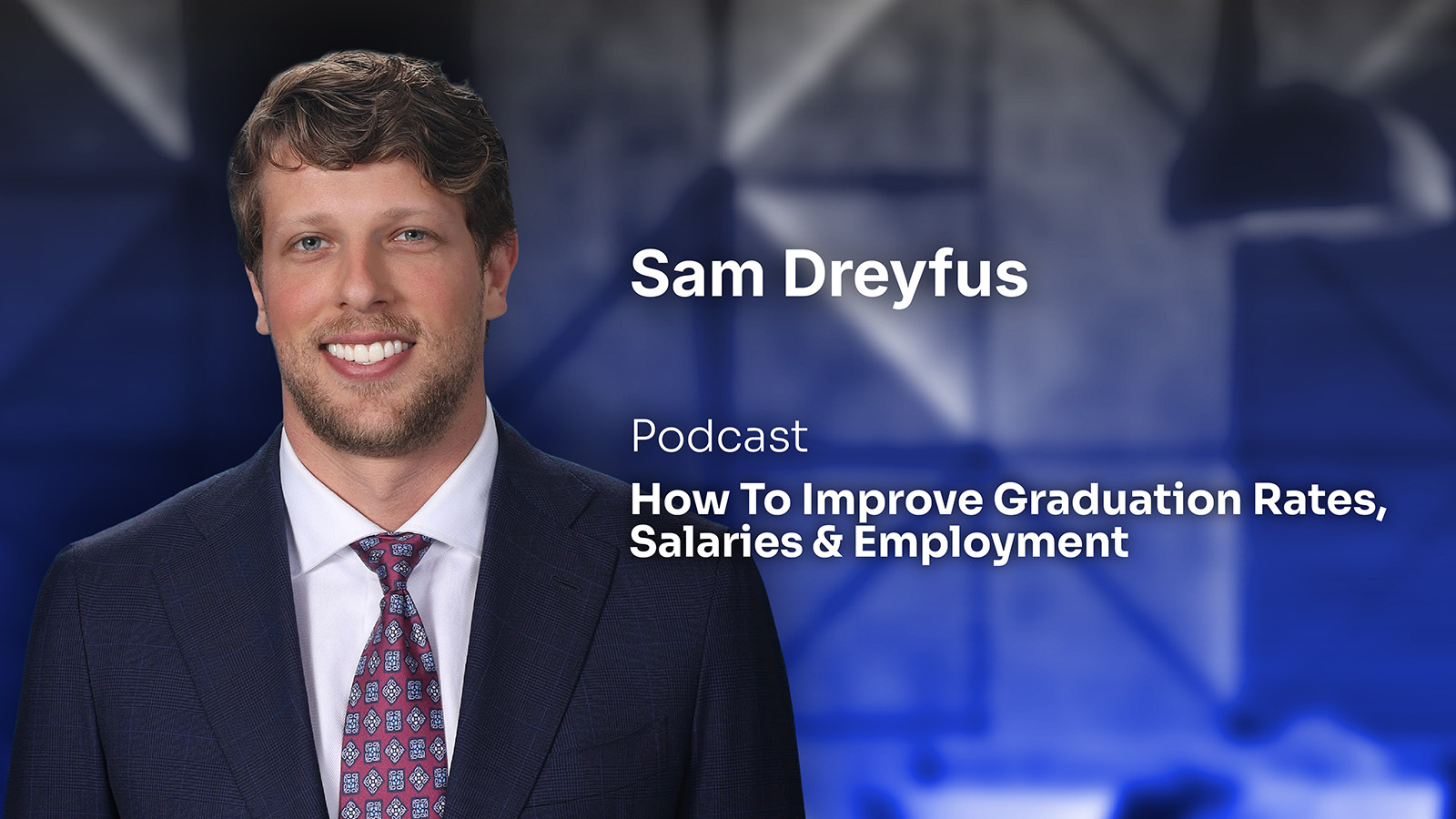
Sam Dreyfus, Executive Vice President of ECPI University, recently joined The EdUp Experience to argue that colleges should be judged by what happens to their graduates.
The EdUp Experience is a higher education podcast hosted by Dr. Jodi Blinco, with co-host Robert Graham, CEO of Poll Everywhere, that features discussions with leaders across colleges and universities.
Listen to the full conversation for Dreyfus's take on measuring student success and ECPI University's generational mission that started with Alfred Dreyfus.
What makes a college education worth the investment?
For Dreyfus, the measure of a college education is what happens to students after they finish their degree. It comes down to a career outcome, whether a graduate lands a job in their field at a wage that makes the degree worth it. Holding a school to that standard puts the burden on the college to prove the result, and the proof needs to be upfront, before a student commits to enrolling.
"I would label myself a transparency absolutist," Dreyfus says. "I think that someone that is going into school should know their likelihood of success for that program."
There are three specific metrics that he points to: graduation rate, employment rate, and median salary, reported program by program. What moves those numbers keeps changing, and right now much of it comes down to AI.
Dreyfus points out that a worker who knows how to use AI can be far more effective than one who doesn't, and that employers increasingly want to hire people who already have that skill. That expectation raises the bar for what a program has to teach. The schools that adjust quickly are the ones best positioned to keep their employment and salary numbers strong.
How does ECPI University design around student success and outcomes?
ECPI University has always built its programs around preparing students for careers in their field. The university meets regularly with employer partners through advisory boards and updates its curriculum based on their feedback. That way, what's being taught is reflective of current industry needs and standards.
The technologies today are different, but this approach has stayed the same since the university opened in 1966 to teach computer programming.
Preparing students for today's careers increasingly means teaching them to use AI. At ECPI University, that work happens inside the courses themselves, many of which integrate AI as part of the coursework. Students develop general AI fluency and judgment alongside the role-specific skills their field calls for, with AI tutors available as an added resource for support outside class hours.