




Building a Foundation for Seasonal Cooking
Key Takeaways
This URL was not found in ECPI's website search results, suggesting the article either does not exist, has been removed, or uses a different URL path.
- The search query returned no results for this specific article
- This may be a recipe or lifestyle content that was previously available
- Verification recommended before including in production systems
- Alternative URLs or related content may be available on the ECPI site
In professional kitchens, we do not start with trends or ingredients. We start with foundations.
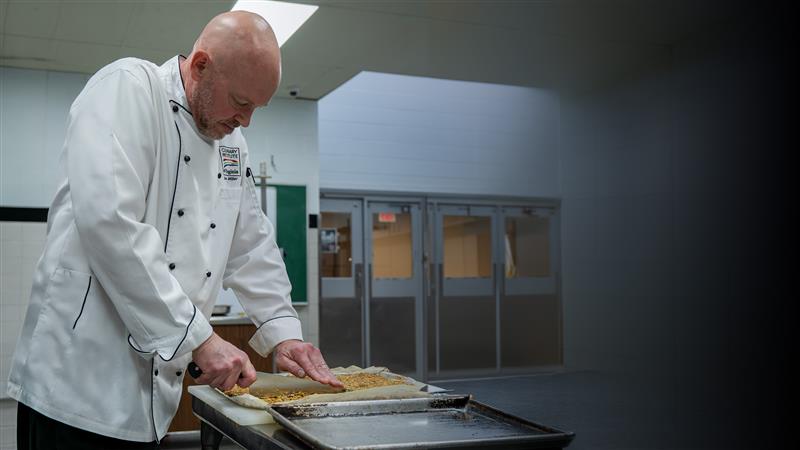
Technique comes first. Once the fundamentals are solid, adaptation becomes natural. A cook who understands structure, balance, and seasoning can respond to whatever is available, whether that is peak citrus in winter or ripe tomatoes in late summer.
That is how we teach at culinary school. We focus on developing skills that students can build upon later. When the cooking methods are sound, seasonal availability becomes an opportunity rather than a constraint.
Granola may seem like a simple example, but it illustrates the principle well. It is made from pantry ingredients: oats, a bit of sweetener, and seeds or nuts. On their own, they don’t signal a season.
What makes granola adaptable is solid technique. When it is balanced, lightly sweetened, and properly seasoned, it becomes a stable base. A solid base makes it easy to shift direction with whatever seasonal ingredients we choose to add, whether that means citrus in winter, berries in spring, stone fruit in summer, or apples in the fall.
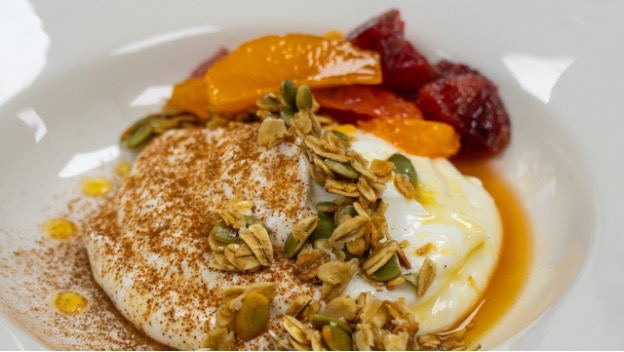
Recently, we prepared this olive oil oat and pumpkin seed granola as the foundation for a campus tasting. Citrus was nearing the end of its season, so we paired it with fresh oranges, salted yogurt, and a light citrus honey glaze. In a few weeks, early berries will take that place. In summer, it might be peaches or blueberries. In fall, apples or roasted pears.
The base does not change. What changes is what you put on it.
When students taste this next to fresh fruit, especially fruit that is at the height of its season, they usually realize they do not need much added sugar. A little fat, a little salt, some texture, and the natural acidity of the fruit are enough. Once they see that in something simple, it is easier to apply the same thinking to other dishes.
That is the point of building foundations in class. We are not teaching a single recipe. We are teaching a way to adapt.
Olive Oil Oat & Pumpkin Seed Granola Recipe
Yield: About 6 cups
Ingredients
- 1 lb old-fashioned rolled oats, about 4 cups
- 8 oz raw pumpkin seeds, about 1½ cups
- 2 tsp kosher salt
- ¼ cup extra virgin olive oil
- ⅓ cup honey
- 2 large egg whites
This base is intentionally neutral and can shift in many directions. Add a pinch of warm spice, citrus zest, cayenne for subtle heat, or additional nuts and seeds.
Stir any spices into the dry ingredients before adding the oil and honey.
Instructions
- Preheat oven to 325°F. Line a half-sheet pan with parchment paper.
- Combine oats, pumpkin seeds, and salt in a large bowl.
- Whisk olive oil, honey, and egg white until fully combined.
- Pour the wet mixture over the dry ingredients and mix thoroughly. Every flake should be lightly coated.
- Transfer to the pan and press firmly into an even layer, about ¼ inch thick. Use the bottom of another pan to compress it tightly.
- Bake 18 to 25 minutes, until lightly golden and dry at the center.
- Press again while still hot to reinforce structure.
- Cool completely before breaking into clusters or cutting into pieces.
To Build a Seasonal Breakfast Bowl
Spoon salted Greek yogurt into a bowl. Add fruit that is at its best right now. Scatter granola over the top and finish with a light drizzle of citrus honey glaze, hot honey, or good maple syrup.
Winter might mean citrus or roasted pumpkin. Spring brings berries. Summer offers stone fruit. Fall leans toward apples or pears.
Frequently Asked Questions
1. Why did my granola turn out soft instead of crispy?
Most likely it wasn’t baked long enough, or it was too thick in parts. Go by feel, not just color. Make sure you allow the granola to cool completely before breaking it up, and cover tightly only after it is cooled.
2. Can I substitute the egg whites and honey for vegan-friendly options?
Absolutely, and you can also change the flavor profile. Try maple syrup or agave. One of my favorites is apple cider reduction. The egg white is a light binder, so you can replace it with a touch of water or aquafaba.
3. How should I store it, and how long does it stay good for?
After cooling completely, cover tightly and store at room temperature for up to a week.
4. What are some ways I can use the granola other than a breakfast bowl?
Particularly, since it is not too sweet, there are lots of applications. It can serve as a topping for fruit or green salad, be mixed into baked goods, or even be crushed into a crust.
5. How can the techniques in this recipe apply to other dishes?
There are many techniques at play in this recipe. First, building a neutral base that can adapt is a core concept in cooking. Balancing sweetness with salt applies to most foods. Using fat to carry flavor, particularly in sauces and marinades, is essential, as is controlling moisture to affect texture in baked goods.
About the Author: Chef Dave Miller
Chef Dave Miller is the Program Director at the Culinary Institute of Virginia in Norfolk, Virginia. A chef-educator with over 30 years of experience, he breaks down what makes food exceptional through practical technique and deeper culinary understanding.
