




Earn and Learn Models: Three Myths Still Holding Apprenticeships Back
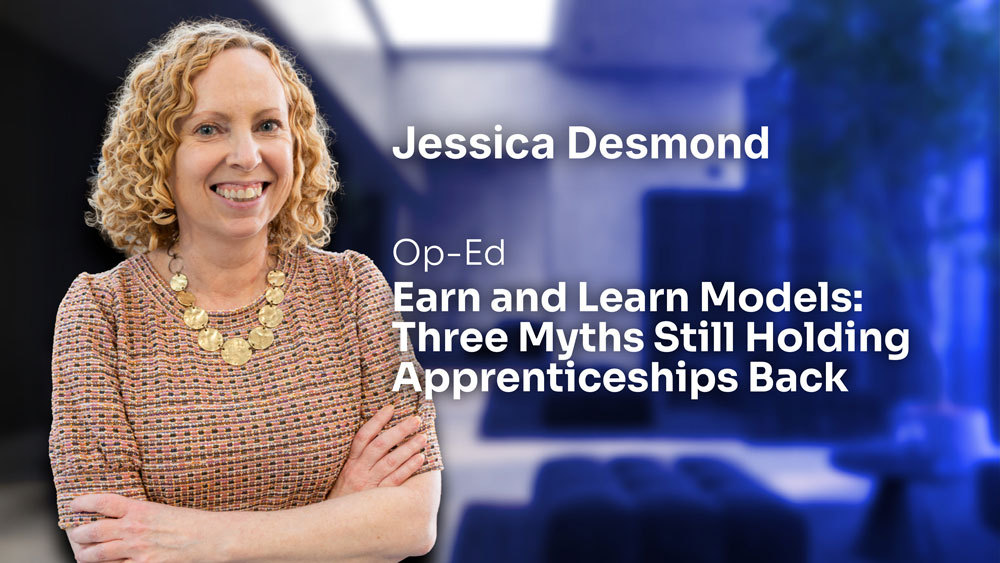
Workforce shortages and evolving employer expectations have pushed apprenticeships back into the national conversation. As colleges and universities search for models that connect education more directly to employment, the question is no longer whether apprenticeships work, but why more institutions and employers have been slow to adopt them.
Jessica Desmond, ECPI University's regional apprenticeship coordinator, takes that question head-on in a recent op-ed published by University Business, a national publication covering leadership and strategy in higher education.
In "These 3 Myths Are Still Holding Apprenticeships Back," Desmond identifies the misconceptions that continue to limit apprenticeship growth, even as evidence supporting the model continues to grow.
What are the biggest myths about apprenticeships today?
Despite growing interest, three misconceptions still shape how employers view apprenticeships: that they only apply to skilled trades, that they require large organizational infrastructure to work, and that the return on investment takes too long to realize.
Desmond uses employer and workforce partnerships to challenge those assumptions. She highlights ECPI University's partnership with IMS Gear, a precision manufacturing company in Virginia Beach. The collaboration shows how smaller employers can build local talent pipelines through apprenticeship programs.
On the question of ROI, she points to research showing that apprentices contribute productive work from day one, and that the financial return often comes sooner than employers expect.
Her perspective positions apprenticeships as a workforce solution that can scale across industries and employer sizes. But, as Desmond puts it, getting there “starts with letting go of outdated assumptions.”
How does ECPI University support apprenticeship programs?
ECPI University develops and manages Registered Apprenticeships, a formally recognized model vetted and approved by the U.S. Department of Labor. These programs are built in direct collaboration with employers, aligning training to specific roles and real job expectations rather than general coursework.
The university’s accelerated, year-round term structure gives employers more flexibility to start new cohorts. That flexibility has helped support long-term apprenticeship partnerships, including ECPI University’s ongoing collaboration with Volvo Cars USA and Busch Group USA.
Employers who are interested in learning more about ECPI University's Registered Apprenticeship programs can reach out to Jessica Desmond directly.